What to Do If You’re Ghosted by a Client


Share the article
ShareFile for Your Firm
Secure document workflows your team and clients will actually use
Get StartedKey Takeaways
It can happen before a contract is signed, after project kick-off, after you ask them to do something or when it’s time to pay. Here’s what to do if a client ghosts you.The relationships you have with prospects and clients can sometimes feel like dating. You have a great first call or onboarding session. It seems like you really see eye to eye and you’re both excited about a joint future.
But then … Nothing.
Where did they go? Was it something you did? Why couldn’t they just tell you they chose another designer or that they’re experiencing a family emergency? Did they even get your message?
And now that they’ve ghosted you, what do you do? Should you sit around and wait? They seemed so excited.
You’re worried about moving on because then you might not have any room for them in your schedule when they’re ready to start again. You don’t want to let them down. But should you even trust them to start again?
You’re left with so many questions and you might never get any answers to them. While it would be great if clients were as committed to the job as you are, ghosting happens. And it can happen at any stage of your career.
Here’s what you can do if you find yourself in this unfortunate situation:
What to Do If a Prospect Ghosts You
One of the good things (if it can even be said to be good) about a prospective client ghosting you is that you haven’t done any work yet. So, if someone pulls a disappearing act, you’re not at risk of losing money. That said, it doesn’t make it hurt any less.
If you’ve had an encouraging conversation with a prospect who seemed ready to sign your contract and then they up and ghosted you, here’s what you can do:
Step 1: Follow Up
If it’s been more than 72 hours and you haven’t heard anything since you sent the contract, send them an email. Keep it straightforward, friendly and professional.
Hi Jason,
Hope you’re doing well!
I just wanted to follow up and see if you have any questions about our last discussion or the contract I sent over on Friday. If you need more time to review, please let me know.
Looking forward to getting started,
Suzanne
By not jumping to conclusions about what went wrong, you’ll give them an opportunity to get back to you without feeling any pressure or reacting defensively.
If you don’t hear from them within another 48 hours (around Day 5), follow up again. This time, try another channel. If you have their phone number, give them a call. If you originally connected through another platform (like LinkedIn), give that a try as well.
I had a client who went radio silent on me after I delivered a proposed strategy, only to discover that she was having problems with email deliverability. Having an alternate means to reach her allowed us to reconnect.
You can attempt one more follow-up around Day 10. If they went on an unannounced vacation or had an unplanned emergency, this should give them sufficient time to get back to you. If you don’t hear back from them after this, move onto the next step.
Step 2: Archive and Move On
If your ghost hasn’t made an appearance by this point, it’s time to move on.
The first thing to do is send one last email. This message will close up the communication, but leave the door open if they want to return in the future (and if you still want to work with them).
Hi Jason,
I’m sorry we weren’t able to reconnect regarding your website redesign. I understand that life can get in the way sometimes, so if you’re ready to revisit this project in the future, please don’t hesitate to reach out.
Regards,
Suzanne
After the email is sent, take whatever notes and info you collected and store them away in an archive. If you don’t have one, create it now. I have three folders I use to manage all my client projects:
- Active
- Closed
- On Hold
If you don’t hear back from the ghost within a year, you can delete them from your archived “On Hold” folder. For now, putting their files there allows you to free up your headspace to focus on prospects who are actively engaging with you.
What to Do If a Client Ghosts You
Now, dealing with a client ghosting you is a bit more challenging. Unless you haven’t made it past the onboarding stage, you’ve likely already committed quite a bit of time and effort into their project.
Here’s what you can do to navigate the situation:
Step 1: Follow Up
Ghosting can happen at any stage when you’re working with a paying client. In my experience, it typically happens within the first half of the job, though it’s not unheard of for someone to disappear at the end. In those cases, it’s usually because of some unforeseen personal emergency.
For the purposes of this post, let’s assume you’ve received the initial deposit and have begun onboarding the client. You had the kickoff call and you went over the intake questionnaire.
Now you’re waiting for them to complete the form and send everything you asked for (e.g., logos, style guide, internally written copy, CMS access credentials, etc.).
You assigned them a to-do in your Progress ShareFile project management system to complete the questionnaire along with the date it’s due. You even set up specific file requests, so they could see everything they owe you right from their dashboard.
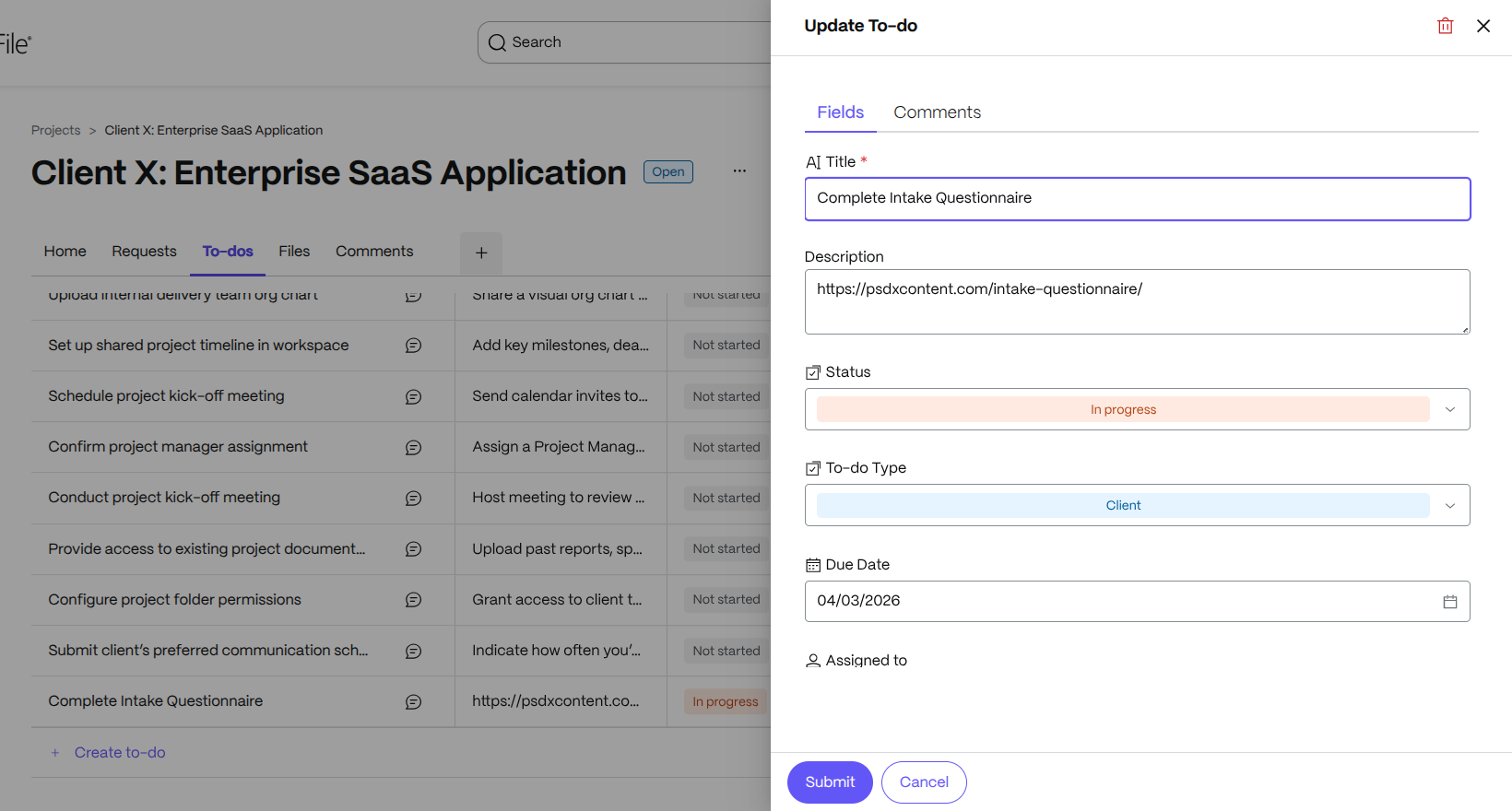
The due date was 24 hours ago and you haven’t heard from them. So, it’s time to reach out.
Similar to communicating with a ghosting prospect, you want to keep the message simple and unemotional.
Hi Maureen,
Hope you’re doing well!
I just wanted to follow up and see if you have any questions from the kickoff call or the questionnaire I sent you on March 28.
If you need more time to review the document and to gather up all the requested files, please let me know. And if there’s anything I can do to help expedite this process, don’t hesitate to ask.
Looking forward to getting started,
Suzanne
This is a reminder without putting any judgment or pressure on it.
Because this is a client, you can’t be too lax with them. If they can’t meet the deadlines you’ve set, they need to let you know so you can adjust the timeline accordingly. It’s not just their project they’re going to hold up by doing this, it’s all of your other projects.
If you don’t hear back within 48 hours of that message, follow up once more. This time, try a more direct approach—call or text.
Remember to stay calm and keep the discussion civil, whether you write a text or leave a voicemail. Just gently remind them that you’re waiting on this info and can’t move forward with the project until you’ve received it. Kindly ask them to get back to you with an estimated date when they can deliver what’s needed.
Depending on what stage you’re at in the process, you could also try scheduling a video meeting with them. Their inbox may be so inundated with messages that they lost track of yours. But a meeting invite will definitely get their attention.
If there’s still no word by Day 7, send one more follow-up. In this message, let them know that you’re activating the Pause Clause from your contract. (The terms will actually need to be in there in order to enact it.)
Step 2: Enact the Pause Clause
You can’t wait around forever. It’s not fair to you or your other clients. In fact, I’d suggest that if you don’t hear back from them within the first 48 hours, you reorganize your schedule and prioritize clients who are actively engaged. If the ghost comes back, that’s fine. In the meantime, work on tasks you otherwise need to complete.
Now, let’s say you’ve followed up three times and you still haven’t heard back. You could always do a little cyber-sleuthing to see if they’ve been active on social media. But that’s not always proof that they’re ignoring you. Social media can be scheduled and automated.
Instead, work on implementing your Pause Clause.
A Pause Clause allows you to put a project on hold if a client is late and unresponsive when it comes to:
- Onboarding requests
- Content
- Feedback
- Approvals
- Payment
Your contract should stipulate how many days you’ll wait before implementing the pause. It should also detail the next steps.
For example, your Pause Clause may look like this:
We’ll have a number of requests for you over the course of this project. In order to keep your project running smoothly and on time, we ask that you complete each request by a certain date.
If you cannot fulfill the request by that date, please let us know as early as possible. All of the dates are available in your ShareFile project folder after project kickoff, so you can plan ahead of time.
If a deadline has passed and we’ve received no response from you within 7 days, we will initiate the Pause Clause. Here’s what happens next:
- Your project will be put on hold.
- An invoice will be sent for the work completed to date.
- You will have 15 days to remit payment.
- If you would like to pick up where you left off, please respond and complete the request.
- We will add you back to the schedule 2 weeks from the completed request date.
- The remainder of the project will be completed within the original timeframe.
When sending the last follow-up email to the client, be sure to highlight the segment of the contract where the Pause Clause is. This way, the client won’t be able to plead ignorance if they come back to you, claiming they never saw it or weren’t aware of it.
If this doesn’t elicit an immediate response, move onto the next step.
Step 3: Send an Invoice
If you collected a deposit before work began, you might be covered for the work you’ve done so far. At least in the onboarding example I gave above.
However, let’s say you and your team have been working for weeks. You’ve just about completed the wireframes, user journey maps and mockups. However, you’re waiting on the content. You could send the files over with placeholder text, but it will add extra time to the budget you hadn’t initially planned for. So, you’re going to wait.
After the Pause Clause is initiated, send an invoice to the client for the work completed to date.
While you can and should move on from the client at this point, keep an eye on that invoice. If they don’t pay it within the given timeframe, send a follow-up with a late fee.
Your contract should have the terms of the late fee spelled out. If they’re not there, you can still charge one as most jurisdictions say that you are entitled by law to assess a fee for late payments.
I’ve always set my late fees to 5% for every 30 days the invoice goes unpaid. That fee gets tacked onto the balance of each monthly invoice until it’s paid.
Feel free to do some research and see what others are doing in your area. You may want to go a bit higher or lower.
Another option is to assess a Kill Fee. This is something you’ll need baked into your contract. It essentially says that the client has to pay 50% (or whatever you think is reasonable) of the originally negotiated project fee in order to cancel the job and walk away.
If you get the sense that the client is unresponsive because they’re unhappy with how the project is going (or you don’t feel they’re worth keeping on as a client), this might be the best option. Invoicing for work done to date seems like you want to leave the door open. The Kill Fee closes that door, so that you can both move on.
Step 4: Collect Your Payment
If the client continues to ghost you even after sending 90 days’ worth of invoices or a Kill Fee their way, you’ll need to take more serious action.
Hopefully, you haven’t handed off any of your work to them in a way that they can implement it on their own. If they have done so, then they are in violation of the copyright you own on that work—until you release it to them with the agreed-upon payment, of course.
If this has happened, you can seek to have the designs, content or whatever else you gave them pulled off of the internet until they pay. In the U.S., you can do this through a DMCA takedown request. If they operate elsewhere in the world, you’ll need to find the relevant party to submit this request through.
If they haven’t used any of your work but still haven’t paid or responded, you can take them to small claims court. Or you might hire a collection agent. Neither option will guarantee you’ll get paid, but it’s worth pursuing if the client owes you a substantial amount.
My hope for you is that it doesn’t come to this. In an ideal world, every client would be an active partner, accountable to their deadlines and responsive to your requests. But in my 13 years of doing this, I can tell you that’s not always the case. So, it’s useful to know what your options are if it does.
Step 5: Archive and Move On
Unlike a ghosting prospect, there’s no need to send a final email to the client. At this stage, they’re aware of what transpired. The archival process is so you can move their project folders and messaging out of the way.
It’s much easier to move on if they’re “out of sight, out of mind.”
Wrapping Up
It’s not uncommon for prospects to ghost. There are many reasons why it happens. And what I’ve found is that it really is a lot like dating.
If someone is serious about working with you, they’d put in the time and effort to get it done. And perhaps it’s just a matter of the timing being off. That’s fine. But you shouldn’t waste your time and blow off other opportunities if someone else is on the fence about hiring you.
As for clients ghosting, that’s another story. Unfortunately, this can be quite disruptive and costly to your business if you let it be. So, while you’re probably hoping this never happens to you, it’s still a good idea to have a process in place in case it does. That way, instead of stressing about the situation, you can follow a set of steps to get yourself past it.
If you want to try and prevent ghosting from happening, there are a few things you can do. The first is to always collect a deposit upfront. Also, take the lead. Get yourself project and client management software that makes it easy for you to assign tasks and deadlines for clients. And make it easy for them to fulfill your requests.
If you haven’t tried it yet, ShareFile software is a good tool for this. It simplifies the process of organizing clients and projects, and also gives you a secure place to share and receive files.
Topics
-
Client Engagement
-
VDR
-
File Management
-
File Sharing
-
Integrated E-signature
-
Apps and Integrations
-
Workflow Automation
-
Security and Compliance
Subscribe to ShareFeed Today
Stay ahead with the latest ShareFile releases, feature enhancements, and product updates delivered monthly straight to your inbox.
Related Posts